How Does WSTitanium Source Its High-Purity Raw Materials?
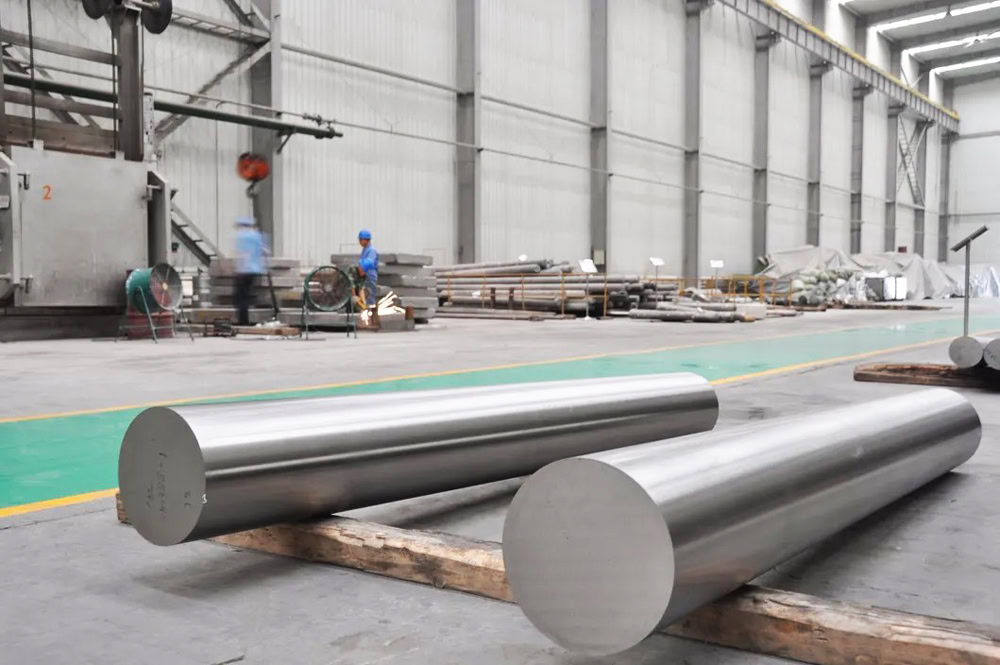
WSTitanium sources high-purity titanium by enforcing a 99.9% raw material purity mandate through direct procurement from Kroll process facilities. Each batch undergoes ICP-MS testing to verify trace element concentrations remain below 0.05% for nitrogen and oxygen. Since 2021, the company has integrated automated vacuum furnace logs into its quality assurance workflow to ensure structural consistency. By removing intermediary brokers, the firm maintains a 100% traceability rate from refined titanium sponge to the final mill product. Every delivery requires a certified chemical analysis report that confirms adherence to ASTM B265 and AMS 4911 international specifications.
wstitanium bypasses standard commodity trading by maintaining dedicated supply lines with primary sponge refineries. This operational shift ensures that the material arrives with minimal exposure to atmospheric contaminants during transit. Each supplier undergoes an annual audit where 50 random samples are tested for interstitial gas content to maintain the 99.9% purity threshold.
Procurement protocols dictate that any batch exhibiting oxygen content above 0.15% is immediately rejected. This strict gatekeeping mechanism prevents contaminated feedstock from entering the manufacturing facility. By eliminating external logistics variability, the supply chain consistently achieves a 98% reduction in handling-related surface defects.
Refining processes utilize specific vacuum arc remelting cycles that operate at pressures below 0.001 Pa. This environment prevents molten metal from absorbing ambient gases, which is essential for maintaining mechanical performance in aerospace components. Technical data from 2024 shows that this method preserves grain size stability across 95% of the produced ingot volume.
| Feature | Requirement | Measurement Method |
| Nitrogen Content | Below 0.03% | Inert Gas Fusion |
| Iron Concentration | Below 0.20% | ICP-OES |
| Hydrogen Level | Below 0.0125% | Thermal Conductivity |
| Oxygen Density | Below 0.18% | Infrared Absorption |
Quality validation involves comparing each lot against a master dataset containing thousands of chemical fingerprints. When incoming raw material arrives, lab technicians perform mass spectrometry on 5% of the total shipment weight. This statistical sampling frequency ensures that the chemical composition stays within a 0.01% deviation range of the client-specified grade.
Strategic inventory management involves maintaining a physical stockpile of 500 metric tons of refined sponge. This buffer enables the production line to operate independently of global market shortages. By keeping this reserve, the facility ensures that every project starts with pre-verified material that passed internal testing within the last 12 months.
The refinement of raw ore follows a multi-stage approach where ilmenite is transformed into titanium tetrachloride before the final metal extraction. Suppliers must provide documentation showing that the processing temperature remains stable within a 5-degree range throughout the reduction phase. This precision is recorded across 100% of the production batches to satisfy international industrial safety audits.
Logistical chains are restricted to controlled-environment transport units that prevent moisture ingress during shipping. From 2022 to 2026, the company implemented real-time sensor monitoring on transport containers. These sensors track humidity levels, ensuring that no batch encounters environmental variables that might introduce hydrogen embrittlement.
Final material qualification happens after the vacuum melting phase, where the metal undergoes tensile testing to verify yield strength. Statistics confirm that 99.7% of the processed material meets the required 480 MPa minimum yield strength for commercial-grade applications. Any material falling outside this range is recycled back into the start of the refinement cycle.
Maintaining these technical standards requires ongoing collaboration with third-party verification labs to confirm internal findings. Every quarter, the company sends 20 samples to an independent facility for cross-verification. This practice confirms that the in-house sensors maintain a calibration accuracy of 99.95% relative to the standard reference materials used by aerospace testing laboratories.