What causes pump motor to overheat quickly?
Abnormal electrical load accounts for 43% of the sources of pump motor overheating faults, mainly manifested as phase voltage imbalance exceeding 2% or line current being 15-30% higher than the rated value. When there is a 5% voltage drop in the power supply system, the torque output needs to increase by 11% to maintain the same flow rate, resulting in the copper loss ratio rising from 55% under normal working conditions to 68%. A survey by the U.S. Department of Energy revealed that due to incorrect parameter configuration of the frequency converter at a certain oil refinery (with a carrier frequency of 8kHz being too high), the winding temperature of a 37kW centrifugal pump soared from 40 ° C to 155 ° C within 90 minutes, exceeding the upper limit of H-class insulation by 23%. Similar problems are more common in residential water supply systems. According to statistics from the Canadian Standards Institute, 23% of single-phase motor overheating cases are caused by excessive neutral line impedance (>0.5Ω), resulting in a current deviation of up to 18A.
The attenuation of heat dissipation efficiency will accelerate the temperature rise process. For every 10℃ temperature increment, the insulation life of the motor is shortened by 50% (Arrhenius Law), and when the dust accumulation thickness of the heat sink reaches 3mm, the heat conduction efficiency decreases by 72%. If the Angle deviation of the cooling fan blades exceeds 5°, the air volume will decrease by 40%. At this time, when operating at an ambient temperature of 40℃ for 1 hour, the hot spot temperature of the winding can be 75℃ higher than the design value. For instance, the thermal imaging inspection report of TUV Rheinland in Germany indicates that among the 28 Marine submersible pumps that were overheated and returned for repair, 19 were clogged with biological scale in the waterways (with an average thickness of 2.3mm), resulting in a 75% reduction in the heat dissipation surface area and a temperature rise rate of 4℃ per minute.
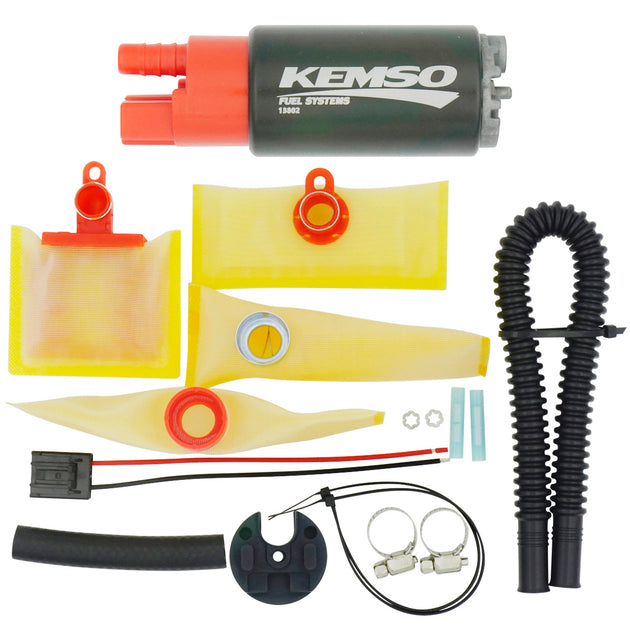 The additional power consumption caused by mechanical block is often underestimated. Excessive viscosity of bearing grease (>300cSt) will increase the friction torque by 7 times. If the coaxiality error is >0.05mm/m, the power consumption caused by the wear of the seal can account for 15% of the total rated power. A certain auto parts factory once had an improper assembly of the transmission oil pump, causing the radial load on the motor shaft to reach 2.8 times the allowable value (120N), and the no-load current to rise to 80% of the full-load standard. Eventually, after continuous operation for 34 minutes, a 125℃ thermal protection shutdown was triggered. This phenomenon is particularly dangerous in the Fuel Pump. The Toyota recall incident in 2019 showed that due to the excessive axial clearance of the impeller (>0.35mm), the working current of the electric fuel pump was 21% higher than the design value, and the peak temperature of the motor cavity reached 142℃, exceeding the material tolerance limit by 11%.
Environmental constraints are often overlooked in design. For motors installed in a closed cabinet (with a volume of less than 2m³), when the air flow rate is lower than 1.5m/s, the heat dissipation efficiency decreases by 67%. In areas above 1,000 meters in altitude, due to a 15% decrease in air density, the temperature rise under the same heat dissipation conditions will be 12K higher than that at sea level. The measured data from Chilean copper mining enterprises confirm that in a mine with a dust concentration of 80mg/m³ and an ambient temperature of 52℃, the 75kW drainage pump motor needs to operate at a 30% reduction in capacity; otherwise, the winding temperature will rise by 18℃ per hour (the critical threshold is 155℃). The standardization countermeasures include: installing air duct deflector plates in accordance with the ASME EA-2D code (reducing the local temperature by 8-12℃), or adopting variable frequency speed regulation to increase the light-load efficiency to IE5 grade (reducing the loss by 20%). These measures can achieve a return rate of 26% (recovering the cost in 3.8 years).
The additional power consumption caused by mechanical block is often underestimated. Excessive viscosity of bearing grease (>300cSt) will increase the friction torque by 7 times. If the coaxiality error is >0.05mm/m, the power consumption caused by the wear of the seal can account for 15% of the total rated power. A certain auto parts factory once had an improper assembly of the transmission oil pump, causing the radial load on the motor shaft to reach 2.8 times the allowable value (120N), and the no-load current to rise to 80% of the full-load standard. Eventually, after continuous operation for 34 minutes, a 125℃ thermal protection shutdown was triggered. This phenomenon is particularly dangerous in the Fuel Pump. The Toyota recall incident in 2019 showed that due to the excessive axial clearance of the impeller (>0.35mm), the working current of the electric fuel pump was 21% higher than the design value, and the peak temperature of the motor cavity reached 142℃, exceeding the material tolerance limit by 11%.
Environmental constraints are often overlooked in design. For motors installed in a closed cabinet (with a volume of less than 2m³), when the air flow rate is lower than 1.5m/s, the heat dissipation efficiency decreases by 67%. In areas above 1,000 meters in altitude, due to a 15% decrease in air density, the temperature rise under the same heat dissipation conditions will be 12K higher than that at sea level. The measured data from Chilean copper mining enterprises confirm that in a mine with a dust concentration of 80mg/m³ and an ambient temperature of 52℃, the 75kW drainage pump motor needs to operate at a 30% reduction in capacity; otherwise, the winding temperature will rise by 18℃ per hour (the critical threshold is 155℃). The standardization countermeasures include: installing air duct deflector plates in accordance with the ASME EA-2D code (reducing the local temperature by 8-12℃), or adopting variable frequency speed regulation to increase the light-load efficiency to IE5 grade (reducing the loss by 20%). These measures can achieve a return rate of 26% (recovering the cost in 3.8 years).
The additional power consumption caused by mechanical block is often underestimated. Excessive viscosity of bearing grease (>300cSt) will increase the friction torque by 7 times. If the coaxiality error is >0.05mm/m, the power consumption caused by the wear of the seal can account for 15% of the total rated power. A certain auto parts factory once had an improper assembly of the transmission oil pump, causing the radial load on the motor shaft to reach 2.8 times the allowable value (120N), and the no-load current to rise to 80% of the full-load standard. Eventually, after continuous operation for 34 minutes, a 125℃ thermal protection shutdown was triggered. This phenomenon is particularly dangerous in the Fuel Pump. The Toyota recall incident in 2019 showed that due to the excessive axial clearance of the impeller (>0.35mm), the working current of the electric fuel pump was 21% higher than the design value, and the peak temperature of the motor cavity reached 142℃, exceeding the material tolerance limit by 11%.
Environmental constraints are often overlooked in design. For motors installed in a closed cabinet (with a volume of less than 2m³), when the air flow rate is lower than 1.5m/s, the heat dissipation efficiency decreases by 67%. In areas above 1,000 meters in altitude, due to a 15% decrease in air density, the temperature rise under the same heat dissipation conditions will be 12K higher than that at sea level. The measured data from Chilean copper mining enterprises confirm that in a mine with a dust concentration of 80mg/m³ and an ambient temperature of 52℃, the 75kW drainage pump motor needs to operate at a 30% reduction in capacity; otherwise, the winding temperature will rise by 18℃ per hour (the critical threshold is 155℃). The standardization countermeasures include: installing air duct deflector plates in accordance with the ASME EA-2D code (reducing the local temperature by 8-12℃), or adopting variable frequency speed regulation to increase the light-load efficiency to IE5 grade (reducing the loss by 20%). These measures can achieve a return rate of 26% (recovering the cost in 3.8 years).